Why the Release of the 1931 Canada Census is Exciting, and Not Just for Genealogists
By Alicia M. Bertrand
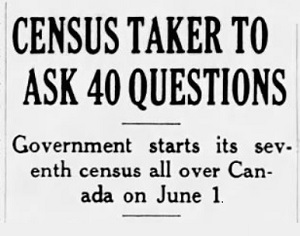
After 92 years, the 1931 Canada Census (the Census) will be released to the public on Thursday, June 1, 2023. For genealogists, the release is exciting for research purposes and being able to unlock unknown information about our ancestors. The Census can aid writers with popular names of the time, sociologists can understand living situations and ethnic data, psychology historians can study the populations of Canada’s penitentiaries and mental institutions, and technology buffs can research how the radio was changing the Canadian media industry. My excitement spans topics including personal family research, Kingston Penitentiary inmates, to the search for two orphaned children in Oshawa. This article will review the details of the Census release, data about people from various backgrounds which can be utilized by many researchers, and what I will personally be searching for in the Census.
The 1931 Canada Census
Due to Canadian law, the Census is classified for 92 years from the date conducted. On June 1, 2023, the Census conducted in 1931 will become public. It will be free to search on the Library and Archives Canada (LAC) website. Ancestry® and FamilySearch subscribers can access the Census with their AI handwriting transcription tool which makes searching easier.
If you search for someone born after January 1, 1931, but before the enumerator knocked on the door, the baby was not counted. However, over 10 million Canadians were counted on the Census. It was the first Census that the Royal Canadian Mounted Police (RCMP) used radio communications and planes to enumerate in the northern areas of Canada.[1]
Information that will be found in the Census include:[2]
- Name of person
- Whether the home is owned or rented
- The estimated value of the home or monthly rent
- How many rooms are in the home, and is it made of stone, brick, or wood
- Whether there is a radio in the home
- The relationships of persons in the home to the Head of the family
- Sex of each person in the household
- The marital status of each person
- Each person’s age as of their last birthday
- Place of birth
- Place of father’s birth
- Place of mother’s birth
- Place of origin if immigrated to Canada
- Nationality of each person
- Racial origin of each person
- Languages spoken
- Religious denomination
- Whether the person can read or write
- Whether the person attends school or work
- Industry in which the person is employed, and
- Whether a person is self-employed, an employer, or an employee.
Information Matters to Everyone
Why does any of that data matter? It matters to a plethora of different industries and researchers. Whether you want to see who lived in your house in 1931, or what your neighbourhood was like, this data can be used for personal or professional reasons.
Writers can use the information to immerse their readers into the landscape they created. If you’re writing a novel that takes place in 1930s Guelph, perhaps you write about Italian immigrants living in St. Patrick’s Ward which was the “Italian quarter”. Perhaps you want to write about the influx of immigrants into Canada at this time, or how families lived together at the beginning of the Great Depression. As a writer, Census data is the easiest way to choose relevant first and last names for characters around 1930. Data from the Census will help you bring reality into your writing.
Sociologists can find a wealth of data in the Census. Research into religious information, the immigrant influx into Canada, marriage and divorce rates in Canada, employment changes at the beginning of the Great Depression, what industries were affected the most or least due to the Great Depression, etc. Pick up any sociology textbook and the Census will provide you with data on a multitude of fascinating topics.
Technology or media enthusiasts or historians can use the Census as Canada’s first data collection of the number of radios in a household. This data can be used to understand wealth, media exposure, technological expansion, and other information on radio adoption in Canada. When the 1941 Census is released, that data can be compared and studied.
True crime aficionados, authors, and podcasters can study the Census data on Canadian mental institutions, prisons, and other government institutions that held criminals. There are a number of criminals in the Census I will be looking for. To read more about them, see the section below.
Amateur family researchers whose family has been in Canada since 1930 will finally be able to see their parents (if you’re approx. 60+) or grandparents (if you’re approx. 25+) in the Census. Find information about their marital status, their siblings, where their parents worked, and so much other information you may not have known before now. If you don’t want to research your whole family, you can search for your house to see who lived there in 1931. Has your neighbourhood gentrified, grown, or declined? There is so much to find out!
Murderers, Orphans, and Grandparents — Why I’m Interested in the Census
Warning: this section includes mentions of infanticide, murder, and death. Do not proceed if these topics are difficult for you to read.
There are three types of data the Census holds that I am interested in. Data about Kingston Penitentiary inmates, the children of murder victims, and family members.
Why such macabre research? I am currently writing a book about historical murders in Ontario. Some of the guilty parties were sent to Kingston Penitentiary if they were spared the noose, and no other information about their life or death is available. Therefore, I will be looking for them in the Census.
Commuted sentences, where are they in 1931?
The sad story of Mary Dolan, a 24-year-old woman who had an affair with a married man twice her age, Thomas McNulty, ends with their baby’s death. Dolan claimed that McNulty hid her in her third trimester in the loft of the Grant Central Hotel’s livery barn, with no fire or heat, snow coming down from the roof, and only two horse blankets for a bed. After the birth, she wrote a letter to McNulty and asked for money to put the baby in a home. She claimed that he replied with a letter saying to “do away with it.”[3] Both Dolan and McNulty were sentenced to be hanged on December 14, 1910. There was a recommendation for mercy, and just two days before their hanging date, both Dolan and McNulty’s sentences were commuted to life in prison at Kingston Penitentiary. I am interested to see if Dolan and/or McNulty are in the Census.
In 1913, Arthur A. Ellis, not to be confused with notorious Ontario hangman Arthur Ellis, was in a shoot-out with his brother-in-law Lewis Porter. Ellis had received death threats from Porter, but the shooting was not considered self-defence. Ellis was sentenced to be hanged, but his sentence was commuted to life in Kingston Penitentiary. It would be interesting to see if Ellis was still alive in Kingston Penitentiary in 1931.

In 1917, Jung Sam murdered his employer, Wong Jew in Parry Sound, Ontario. He initially was sentenced to be hanged, but his sentence was commuted to life in Kingston Penitentiary. I’d like to see if he was still in prison in 1931 and what other data the Census has on him.
Hector Dumont and Marie Raymond were having an affair. This affair led to the murder of Marie’s husband, Cyril Raymond, in 1919. Marie only received a 3-year sentence in Kingston Penitentiary, whereas her lover was sentenced to be hanged. He was spared the noose and was sentenced to life in Kingston Penitentiary. There was very little information on the case, therefore I am looking to see where Marie ended up after her prison sentence, and if Hector is still in prison.
In 1921, Hugh Deline, who was found guilty of the manslaughter of his wife Chrissy in 1911, was in the Ontario Hospital in Hamilton, also known as the Hamilton Asylum for the Insane. He is another inmate I’ll be searching for in the Census.
John Kolton murdered his moonshine partner Peter Starchuk in 1923 and was sentenced to death. However, a week before his execution date, his sentence was commuted to life in Kingston Penitentiary. Kolton’s pastor, Rev. Fr. John F. Andrewjeski, petitioned for his release from Kingston Penitentiary and deportation to Poland to reunite with his wife and children. I was unable to find any documentation of his deportation. Therefore, his absence or appearance in the Census will be of great interest to me.
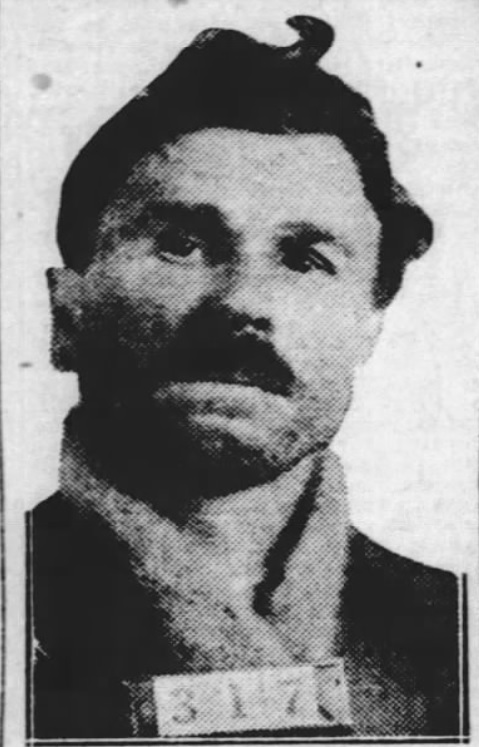
In 1928, Edmund Gabina shot his wife Annie and was sentenced to be hanged for her murder. A week before his execution date, his sentence was commuted to life in Kingston Penitentiary. Although he died in 1938, it would be interesting to see what data the Census has about him.
Frank Buono was sentenced to 15 years in Portsmouth Kingston Penitentiary for the manslaughter of his friend Sophie in September 1930. He appealed the sentence. I was unable to find out whether his appeal was successful, so finding him in the Census will help.
Orphaned
There are two children in particular that I want to find in the Census. Their mother, Annie Morrison, was bludgeoned to death with an axe by her husband William. He was sent to Kingston Penitentiary, but who looked after their two young children?
Another child I would like to find is Ernest Cracknell. His father, Thomas, murdered his mother, Alice, in her boss’ kitchen in 1930. Thomas was sentenced to be executed. However, his sentence was commuted to Portsmouth Penitentiary and there is very little information I’ve seen about him afterwards. I want to confirm that Thomas is in prison and see who took charge of Ernest after he was orphaned by his father’s horrible decision.
Family Information
I’ll be looking for my paternal grandmother, Violet Bertrand. Although my grandmother would only be 15 in 1931, it will be great to see what it says about the family.
Violet’s father, Augustus, only lived until 1938 to 58 years old. It will be interesting to see if he is listed as a Farmer in his occupation. Violet had nine siblings that I’ll confirm the names and ages of, see what education they received in 1931.
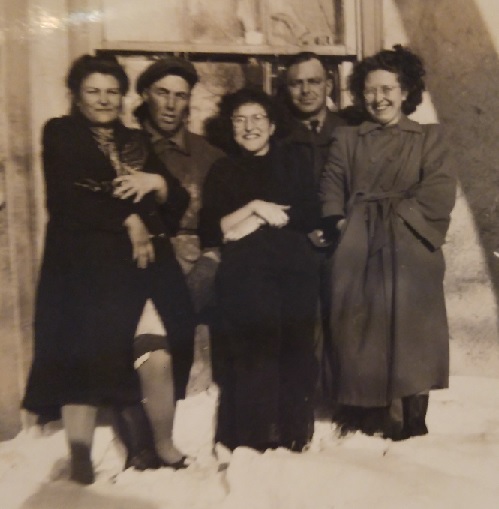
My maternal great-grandmother, Hazel May Austin, divorced her husband Clayton Rosenberger and married his brother Samuel just weeks after the divorce paper ink had dried. Four months later, Hazel, Samuel, and her children moved from Michigan to Ontario in 1926. Any information about the family in 1931 will be of interest. At some point, her ex-husband Clayton and his second wife, Edith, moved to Ontario as well. Did the families live near each other? My grandfather Charles was very close with his half-siblings born to Clayton and Edith. There are great photos of the half-siblings hanging out together.
Join in on the fun on Thursday, June 1st for the 1931 Canada Census! Comment below what you’re most excited about looking for. Email me if you need help with your search or need a lot more searching done: alicia@ancestrybyalicia.ca
Copyright 2023 Ancestry by Alicia
[1] The Windsor Star (Windsor, Ontario, Canada) Wednesday, April 15, 1931, pg. 11.
[2] Claresholm Local Press (Claresholm, Alberta, Canada) Fri, May 15, 1931, pg. 2
[3] The Globe (1844-1936); Toronto, Ont. [Toronto, Ont] 05 Aug 1910: 7.
 Ancestry by Alicia